

### Blog Post:
Curved sofa sales are surging in 2024, but even design-minded buyers should approach these hero pieces with a clear, measurement-first plan—especially if space, comfort, or maintenance are top priorities.
Key Takeaways
- Curved sofas deliver standout style and social benefits, but can create complex fit, comfort, and cleaning challenges—especially in small or rectangular rooms.
- Most shoppers regret skipping proven steps like true-to-size mockups, careful ergonomic checks, and targeted upholstery questions before buying.
- Practical layout, measurement, and fabric choices matter far more than aesthetic trends for long-term satisfaction and daily function.
- Why curved furniture is the 2024 must-have (and what that actually means for shoppers)
- The three real buyer pain points (don’t buy before you read these)
- Are curved sofas right for your space? (how to decide)
- Exactly how to measure and mock up a curved sofa (step‑by‑step)
- Ergonomics and comfort: what dimensions actually matter
- Materials, upholstery behavior, and cleaning (what retailers don’t tell you)
- Styling & layout tips—rugs, pebble coffee tables, and pairing pieces
- Pros and cons—realistic tradeoffs for everyday living
- Buying checklist & 10 questions to ask before checkout (fills competitor gaps)
- Real buyer complaints and fixes (case studies + one‑line remedies)
- Quick product-match cheat sheet (what to buy for each room size and need)
- Cost, resale, and longevity considerations (is the premium worth it?)
- FAQ: Curved Sofas and Furniture
Why curved furniture is the 2024 must-have (and what that actually means for shoppers)
Curved furniture, led by the curved sofa, is dominating living rooms worldwide—for good reason. In 2024, the global furniture market reached approximately $568.6 billion, with curved sofas and related pieces showing an impressive 12% year-over-year sales growth, compared to just 5% for standard straight-edged sofas (source).
The big draw? Curves signal both safety and approachability at a subconscious level, making rooms feel warmer and more welcoming. Unlike hard corners, curves lower the risk of bumps for families and pets. In open-plan designs, they gently turn guests toward each other, boosting conversation and relaxation (source). For brands and retailers, curved silhouettes have become commercial “hero” pieces, driving higher price points and faster inventory turnover. But buyers should know: what looks stunning in a showroom doesn’t always translate to easy fit and everyday comfort at home.
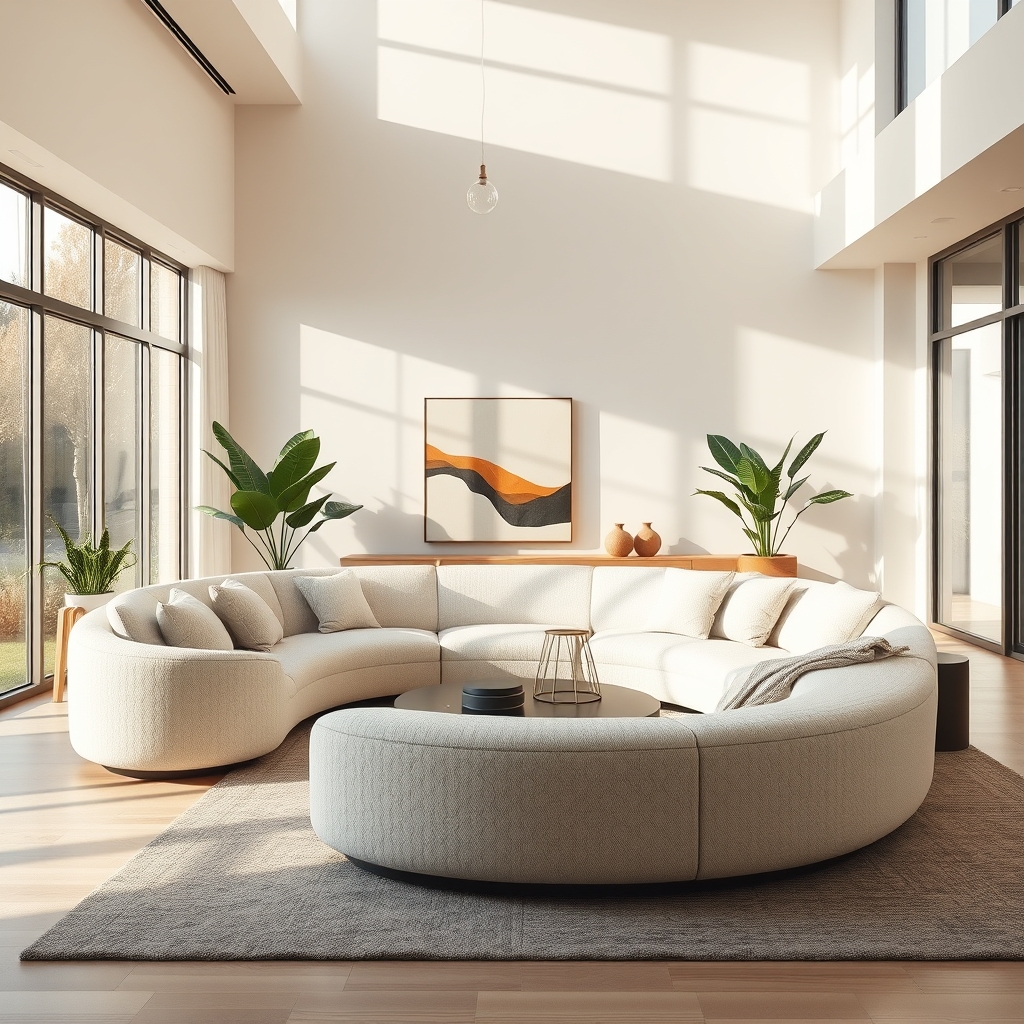
The three real buyer pain points (don’t buy before you read these)
Behind the buzz, three issues keep surfacing among buyers of curved sofas and rounded sectionals:
- Fit/Layout Problems: Many struggle to make a sweeping arc work in compact or rectangular rooms. Curved pieces rarely sit flush against walls, so you lose usable floor space. It’s challenging in a curved sofa small living room scenario, often forcing awkward “floated” placement.
- Inconsistent Comfort: The seat depth and back/arm angle change along the curve. This means comfort varies—even within a single sofa—and may not suit all body types or lounging habits (source).
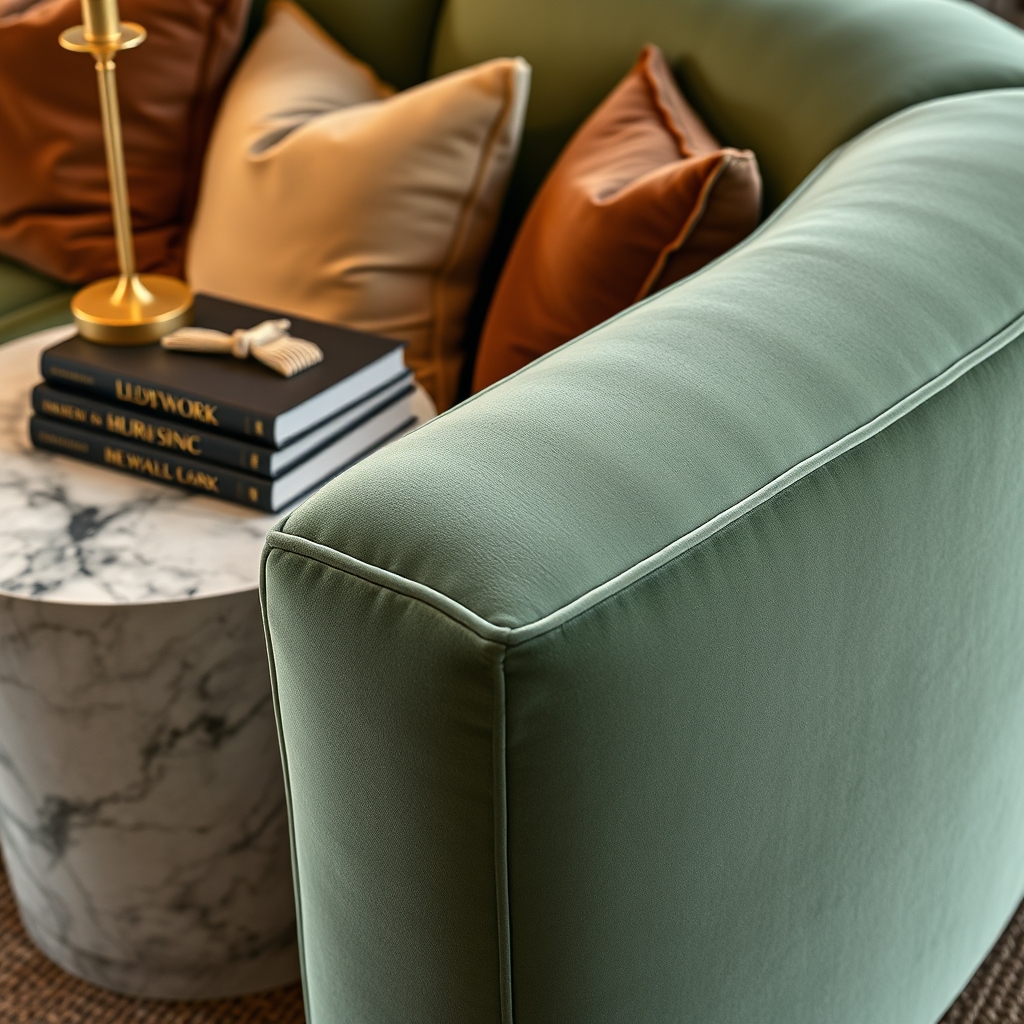
- Maintenance Hassles: Upholstery fabric (and especially leather) stretched over curves gathers dust where the curve meets seams. It’s harder to vacuum, wipe, or spot clean, and aligning rugs or coffee tables gets tricky.
Quick remedies? Mock up the true footprint, check comfort at different points along the seat, and prioritize easy-clean “performance” textiles—more on these below.
Are curved sofas right for your space? (how to decide)
Before committing to any curved furniture, use this five-point checklist:
- Room Shape: If your room has alcoves or is highly rectangular, layout flexibility drops. Curved silhouettes often cannot hug the wall, and may cut across traffic paths.
- Size: Anything under 60 sq ft (about 2.7 x 2.2 meters) needs extra scrutiny—every inch counts. For curved sofa small living room placement, measure twice.
- Traffic Flow: Will the back of the sofa block movement, sightlines, or doors?
- Focal Point: Do you want conversation anchoring around the curve—or is the TV the real priority?
- Capacity vs. Impact: Sculptural curves may seat fewer guests than straight sectionals the same size. Are you after function or a visual “wow”?
Remember: “Curved pieces often force awkward placement away from walls and reduce usable floor space,” so weigh their artistic impact against what you’ll use daily (source).
Exactly how to measure and mock up a curved sofa (step‑by‑step)
Most regret comes from misjudging how a curved sofa or rounded sectional actually fits, especially in small living rooms. Here’s a no-nonsense, measurement-first approach:
- Obtain Key Measurements: Get arc length (distance along the outer curve), chord (straight-line from end to end), and sofa depth.
- Tape & Rope Mockup: Mark the chord with painters tape. Fix one end of your string to the midpoint (the radius) and swing the curve using a pencil or more tape.
- Clearance: Add at least 30 in (76 cm) for walking space around the largest curve.
- Pathways & Doors: Check the largest, non-bending section fits through doorways and stairs—including any tight turns inside your building or home.
- Furniture Pairing: Mark your target rug and coffee table spots (more below) so you spot issues early.
Visual How-To: To mock up a curved sofa for a small living room:
- Tape the straight chord (end to end).
- From the midpoint, use a marked string at the sofa’s radius to “draw” the outer arc on your floor.
- Lay out boxes or paper to mimic seat depth.
- Walk around to test flow—especially with doors and windows.
Remember: Most top competitor guides do not walk through this, but it’s critical for fit and everyday comfort. If you want more detail on fitting furniture to unique layouts, see this practical buying checklist.
Ergonomics and comfort: what dimensions actually matter
Here are the key numbers that matter for anyone who sits, lounges, or naps on a curved sofa or rounded sectional sofa:
- Seat Height: 17 to 19 inches (43 to 48 cm) fits most adults comfortably for both sitting “properly” and relaxing.
- Seat Depth: 21 to 24 inches (53 to 61 cm) is an ideal range—but measure the shallowest and deepest points on a curve. Too deep at the center? Add custom throw pillows.
- Back Angle & Arm Rise: Best comfort comes with a 100–110° angle between seat and back, and armrests that don’t slope so dramatically your elbow “falls off.”
- Test Across the Curve: Don’t just sit at one spot. Try both ends and the middle to check for taper issues—especially on shorter curved sofas or a rounded sectional sofa.
- For Diverse Body Sizes: If you’re pairing with a curved accent chair or have young kids/adults, check whether all users’ feet touch the ground at their favorite seat. Uncomfortable “float” is a common and underdiscussed issue.
“Buyers cite inconsistent comfort caused by the tapering seat depth and arm-to-back angles that can feel too shallow or too wide for standard body proportions.” Too many shoppers forget this until the sofa arrives.
Materials, upholstery behavior, and cleaning (what retailers don’t tell you)
The look of a curved furniture piece depends on how its fabric or leather performs over time. Here’s what matters most:
- Fabric vs Leather: Performance fabrics (often polyester blends or treated cottons) maintain tension better around curves and clean more easily than natural linen or untreated boucle.
- Dust & Debris: Seams along the inner and outer curves are magnets for dust, crumbs, and pet fur. Vacuum with a crevice tool every few weeks.
- Stretch & Sag: Ask about upholstery warranties and fabric “cleanability codes.” Some textiles loosen with daily use, making seams baggy or puckered.
- Cleaning: Spot-clean with manufacturer-recommended solutions. Avoid steam on glued seams; it can cause peeling or warping.
- Reupholstery & Repair: Curved pieces are harder (and costlier) to reupholster than straight designs. Always ask for removal/panel access details before checkout.
Most “top” guides skip this. For more on cleaning codes and fabric choices, check this detailed post on skirted seating fabrics.
Styling & layout tips—rugs, pebble coffee tables, and pairing pieces
Curved sofas shine when paired with the right accessories, but buyers report that “rug or coffee-table alignment is tricky when furniture is curved.” Here’s how you can simplify:
- Rug Shape/Size: Irregular or oval rugs echo the curve. For smaller rooms, a round rug under a curved sofa helps “ground” the shape—but always buy a rug at least as wide as your sofa’s chord for balance.
- pebble coffee table alignment: These organic/rounded tables fit naturally against the inner curve, avoiding awkward “floating” corners. Choose a table no wider than 2/3 the sofa’s chord to maintain flow.
- Balancing with Straight Pieces: Don’t overdo curves; balance with at least one straight or lightly angled item—think a linear console, bookshelf, or accent lighting.
- Open Plan vs Rectangular Rooms: In open layouts, float the curved sofa to create a conversational zone. In tight rectangles, snug one end close to a wall to reclaim floor area.
Looking for more rug or ottoman tips? Try this skirted furniture style guide for inspiration.
Pros and cons—realistic tradeoffs for everyday living
| Benefit | Drawback |
|---|---|
| Softens harsh lines; adds sculptural visual focus | Reduces usable floor space, especially in a curved sofa small living room |
| Improves safety—no sharp edges for kids or pets | Layout inflexibility: can’t hug walls or corners |
| Encourages better conversation (non-TV layouts) | Inconsistent comfort across the curve (tapered depth/arms) |
| Higher resale/staging value (hero piece status) | Can date quickly if trend fades |
| Drives higher average transaction value for sellers | Fewer seats for given space compared to right-angled sectionals |
Buying checklist & 10 questions to ask before checkout (fills competitor gaps)
Use this checklist in store or online:
- What is the true footprint? (Get arc length, chord, and radius, not just “width.”)
- Is the sofa suitable for a curved sofa small living room (sub-60 sq ft) or larger space?
- What are the seat height, depth (at shallowest/deepest), and arm rise numbers?
- What “cleanability code” does the fabric have? (W, S, WS, X, etc.)
- Is there a warranty covering upholstery tension/stretch over 2–5 years?
- Will it fit through my door, stairs, and tight hallway turns?
- What is the return policy—especially for freight returns?
- Are performance/durable or removable covers offered?
- Can you provide a visual mockup on my dimensions (digital or in showroom)?
- Who handles reupholstery and what’s the estimated cost?
For more on space-smart shopping, check this furniture measurement checklist.
Real buyer complaints and fixes (case studies + one‑line remedies)
Here are three short, real buyer complaints—and one-sentence solutions for each:
- Complaint: “I bought a rounded sectional sofa for my apartment and realized it eats the room—I can’t fit a coffee table comfortably.”
Remedy: Swap for a modular curved sectional or a compact curved accent chair plus a pebble coffee table designed for tight layouts. - Complaint: “My kids hate one side of the curved sofa—the seat is too shallow.”
Remedy: Order custom wedge-shaped seat cushions to make all positions comfortable. - Complaint: “I can never get crumbs out of the seams and pet hair sticks to the curve.”
Remedy: Choose a performance fabric with anti-static finish and add a monthly crevice vacuum routine.
For more on adapting living room seating to real-world needs—including rounded sectional sofa layouts and skirted options—don’t miss our in-depth room guide where comfort and practicality meet style.
Quick product-match cheat sheet (what to buy for each room size and need)
- Under 60 sq ft: Compact curved loveseat, pebble coffee table under 30 in (76 cm), and a small oval or round rug. Add a curved accent chair if space allows.
- 60–150 sq ft: Small-radius curved sectional sofa, pebble coffee table 30–40 in wide, larger organic rug shape. Combine with a linear console for storage.
- 150+ sq ft: Statement (hero) curved sofa, two pebble coffee tables or ottomans nested, and layered area rugs—perfect for open plan social zones.
Curved pieces “create inviting spaces for relaxation and conversation.” Retailers report not only rising average transaction values, but also that these hero items stage homes for top-dollar sales (source).
Cost, resale, and longevity considerations (is the premium worth it?)
Why pay more for a curved furniture piece?
- They cost extra—due to more complex frames, labor-intensive upholstery, and premium trend status. Expect 15–30% higher prices than similarly sized straight sofas.
- Resale/Staging: The “hug-like” aesthetic sells—curved sofas drive higher transaction values and can help stage a property for a fast sale.
- Protecting Value: Favor neutral upholstery, removable/washable covers, and always document the arc, chord, and radius to help a future buyer fit your hero piece into their home.

Performance and resale value vary—think function, care, and “fit for the next owner” before you splurge.
FAQ: Curved Sofas and Furniture
Will a curved sofa fit in a small rectangular living room?
It can, but you’ll lose usable floor space and may need to float the sofa away from corners. Always mock up with tape, and consider modular or petite-radius versions for under 60 sq ft rooms.
What is the ideal seat depth for a curved sofa?
Target 21–24 inches, but check both the shallowest and deepest positions along the curve. Add custom throw pillows if needed for comfort at all spots.
Are curved sofas more difficult to clean?
Yes, curved seams gather more dust and crumbs. Choose performance textiles, vacuum seams regularly, and avoid fabrics that lose tension or wrinkle easily.
How can I pair a rug or coffee table with a curved sofa?
Look for irregular or round rugs that echo the sofa’s curve, and select a pebble coffee table sized no wider than two-thirds of the sofa’s chord for best proportion and flow.
Do curved sofas hold their value?
Generally, yes—especially if you buy neutral colors and document true measurements for future buyers. Their “hero” status means faster resale when properly maintained.